CORE TECHNOLOGY
  • Freeze In-Situ Reduction Technology
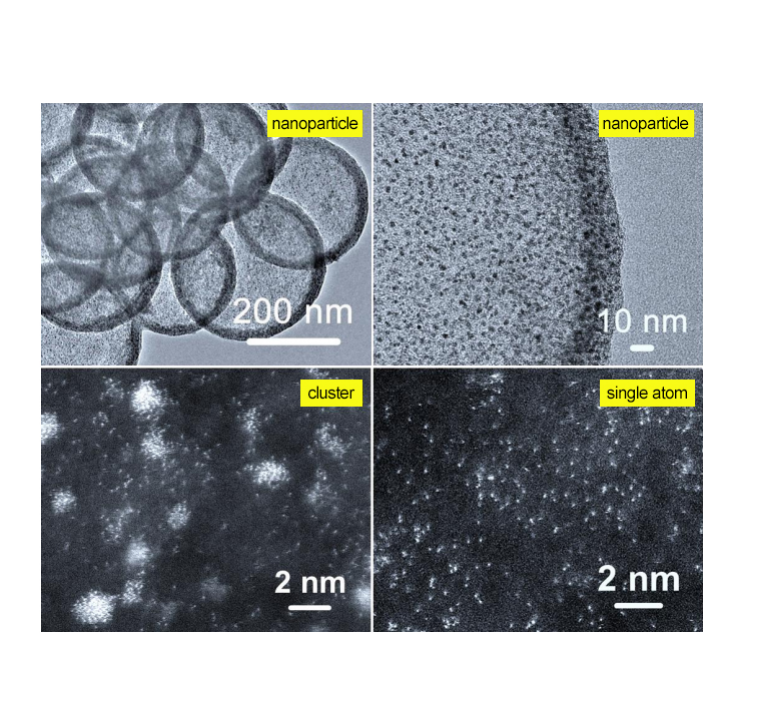
    Through the freeze in-situ reduction technology, active components such as non-metallic nanoparticles, clusters and single atoms can be controllably prepared. It enables large-scale synthesis of materials with good dispersibility and controllable morphological structures, laying a foundation for the preparation of photocatalytic materials.
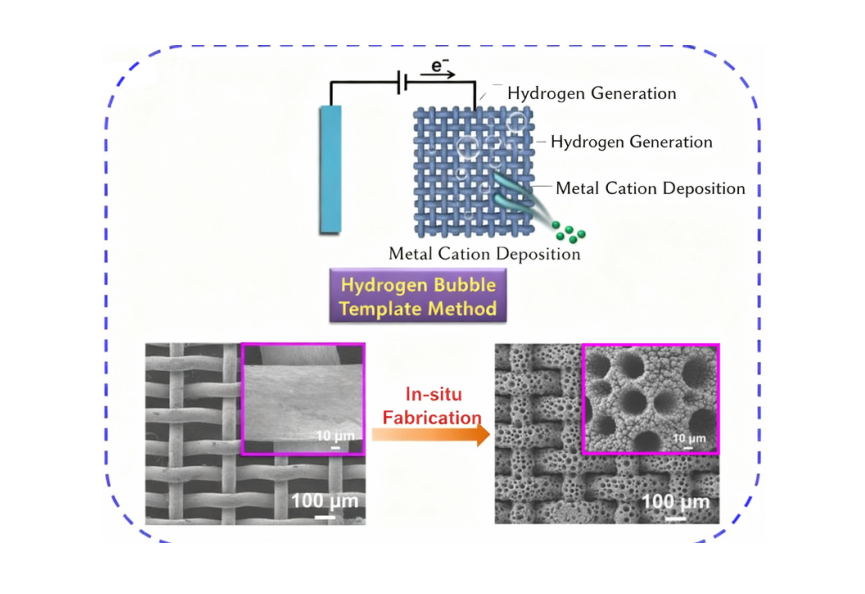
  • Hierarchically Porous Nickel Self-Supporting Hydrogen Evolution Electrode Synthesized by Hydrogen Bubble Templating Method
    A two-electrode system is adopted, with pretreated nickel foam as the working electrode and a platinum sheet as the counter electrode, and electrodeposition is performed using a nickel metal salt electroplating solution. A relatively large current density, generally 0.5-1A/cm², is applied to the anode and cathode, prompting the cathodic hydrogen evolution side reaction to occur simultaneously with metal deposition. The dynamic hydrogen bubbles generated by the side reaction act as templates for
  • Sputtering Spray Method
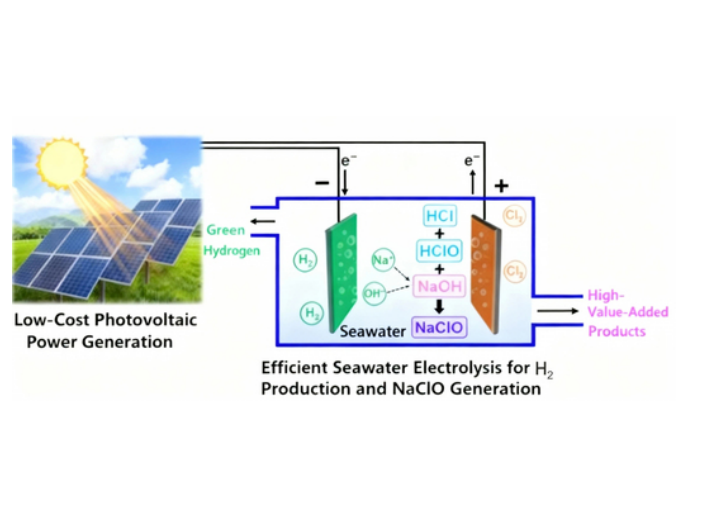
    First, catalytic materials such as ruthenium (Ru) and iridium (Ir) are deposited as nano-coatings on a titanium sheet substrate via sputtering to produce electrodes with high activity and durability. Then, this electrode is used as the anode and placed in an electrolyzer. After energization, Cl⁻ in the brine is catalyzed by the electrode to generate Cl₂, which then reacts with OH⁻ in the solution to produce sodium hypochlorite. The entire process can reduce energy consumption and increase output
  • S-scheme Photocatalysis Combined with Tandem Carbonylation Strategy
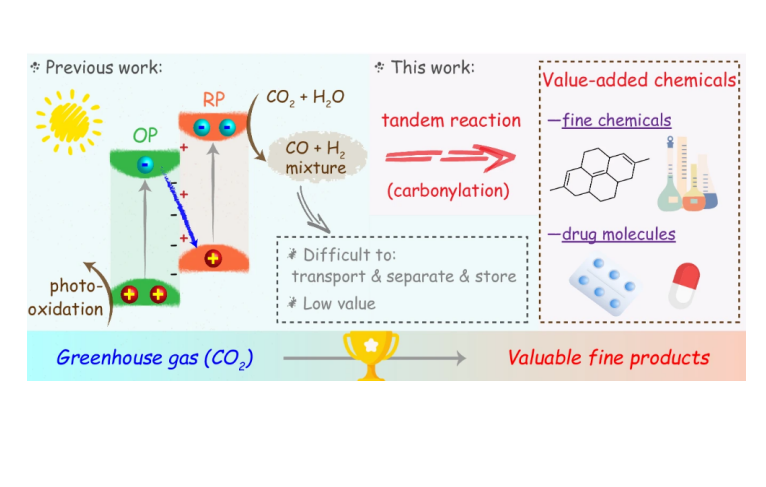
    Based on the more negative conduction band (CB) potential of Bi₂S₃ compared to CeO₂, Bi₂S₃ can act as a high-efficiency reductive photocatalyst when constructing an S-scheme heterojunction with CeO₂. This enables efficient charge carrier separation and strong redox capability. The study integrates a tandem strategy, combining CO₂ photoreduction with Pd-catalyzed carbonylation. In this system, CO₂ undergoes photoreduction via the CeO₂/Bi₂S₃ S-scheme heterojunction, and the in-situ generated CO is

ABOUT US
Focusing on research and industrialization to promote the development of green hydrogen energy. ​
About us
Business Introduction
Talent Team
Organizational Structure
About the Research Institute
Corporate Culture
Development History
News
Product Introduction
Technological Innovation
Scientific Research Achievements
Research Fields
Talent Recruitment
Talent Introduction
Contact us
Add South Office Building of Science and Technology Innovation Industrial Park, Yuzhuang Village, Xinqu Sub-district Office, Xuzhou High-tech Industrial Development Zone
Email client@cugjs.com
Phone 18052237031