Preparation of Photocatalyt ic Materials via Freeze In-Situ Reduction Technology With the accelerated global industrialization process, the excessive consumption of fossil energy (coal, petroleum) has led to increasingly severe energy shortages and environmental pollution. As a green pathway for the direct conversion of "solar energy to chemical energy", photocatalytic technology has become the key to solving this dilemma. Through reactions such as water splitting for hydrogen production and carbon dioxide reduction catalyzed by photocatalytic materials, it can realize clean energy production and carbon cycle closure. |  |
Freeze In-Situ Reduction Technology – Principle Through the freeze in-situ reduction technology, active components such as non-metallic nanoparticles, clusters and single atoms can be controllably prepared. It enables large-scale synthesis of materials with good dispersibility and controllable morphological structures, laying a foundation for the preparation of photocatalytic materials. | 
|
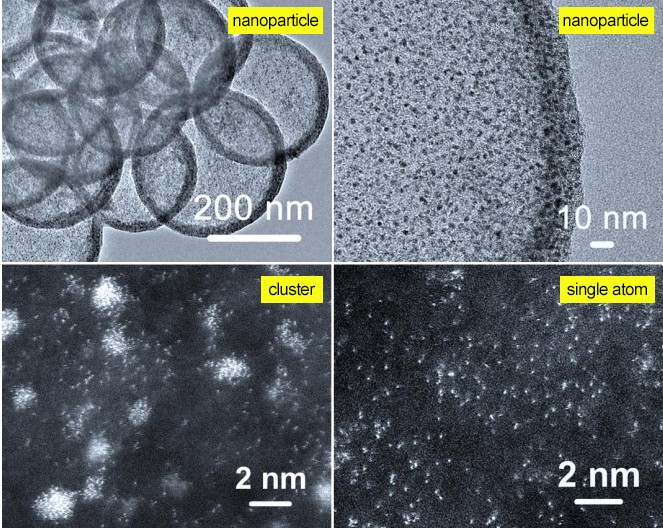
Synthesis of metal nanoparticles, clusters, and single atoms using cryogenic in-situ reduction technology |
Freeze In-Situ Reduction Technology – Advantages
1. Non-Precious Metal Substitution: Break free from dependence on precious metals and adopt non-precious metals with abundant nickel (Ni) reserves, significantly reducing the raw material cost of catalysts.
2. Low Loading Capacity Advantage: Highly dispersed active sites can achieve "accomplishing more with less", directly reducing raw material consumption and production costs.
3. Controllable Comprehensive Costs: It is speculated that the photocatalytic materials prepared by this technology are expected to drive down the cost of photocatalytic hydrogen production.
4. Enhanced Stability: The low-temperature reduction process reduces lattice distortion and surface defects of materials. Meanwhile, the highly dispersed active sites are not prone to agglomeration or loss, which is far superior to materials prepared by traditional methods.
5. Structure-Performance Synergy: Precisely regulate the microstructures of materials such as crystal phase, crystal plane and defects, improving the photocatalytic quantum efficiency.
6. Atomic-Level Dispersion: "Freeze" the agglomeration behavior of metal ions in a low-temperature environment to controllably prepare active sites such as single atoms, clusters or nanoparticles. High-efficiency hydrogen production activity can be achieved even with low metal loading.