Wuxi Water Electrolysis Hydrogen Production Demonstration Project Successfully Put into Operation
On July 16, Wuxi's green hydrogen application demonstration reached a significant milestone – the PEM hydrogen production industrial application project of Wuxi Weifu High-Tech Group Co., Ltd. was successfully put into operation. With the theme of "Hydrogen-Powered, Driving the Future", the event gathered numerous guests including government departments, group leaders, authoritative industry experts, and strategic partners.Taking the energy conservation, carbon reduction, and green industrial transformation of traditional manufacturing as an opportunity, the project promotes in-depth technical verification of green hydrogen equipment, realizes large-scaleapplication and industrial development of green hydrogen, marking a substantial step forward in green hydrogen-driven carbon reduction in local industries.
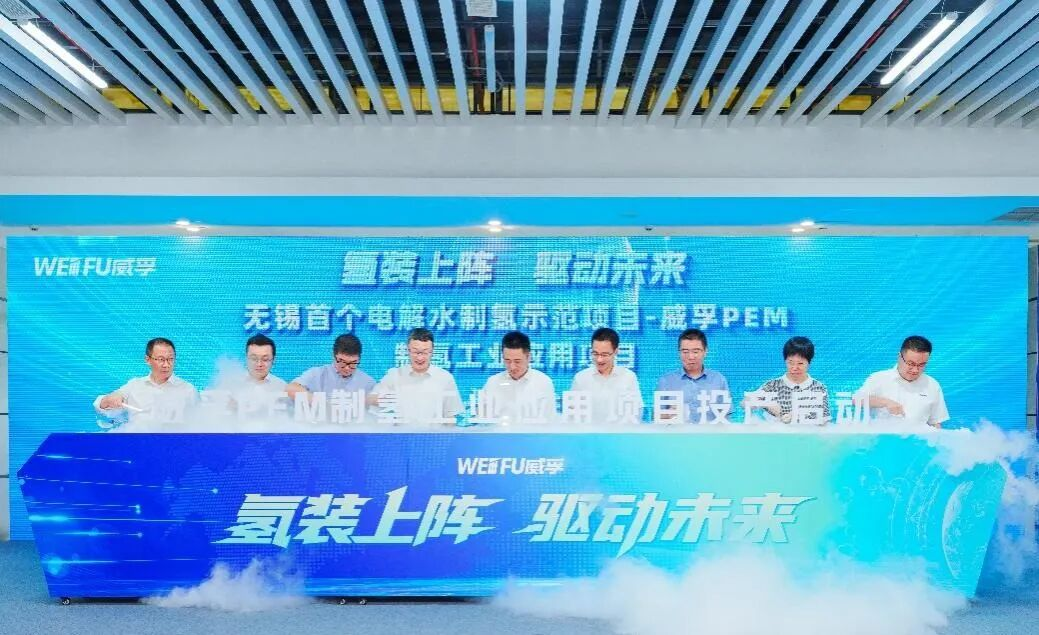
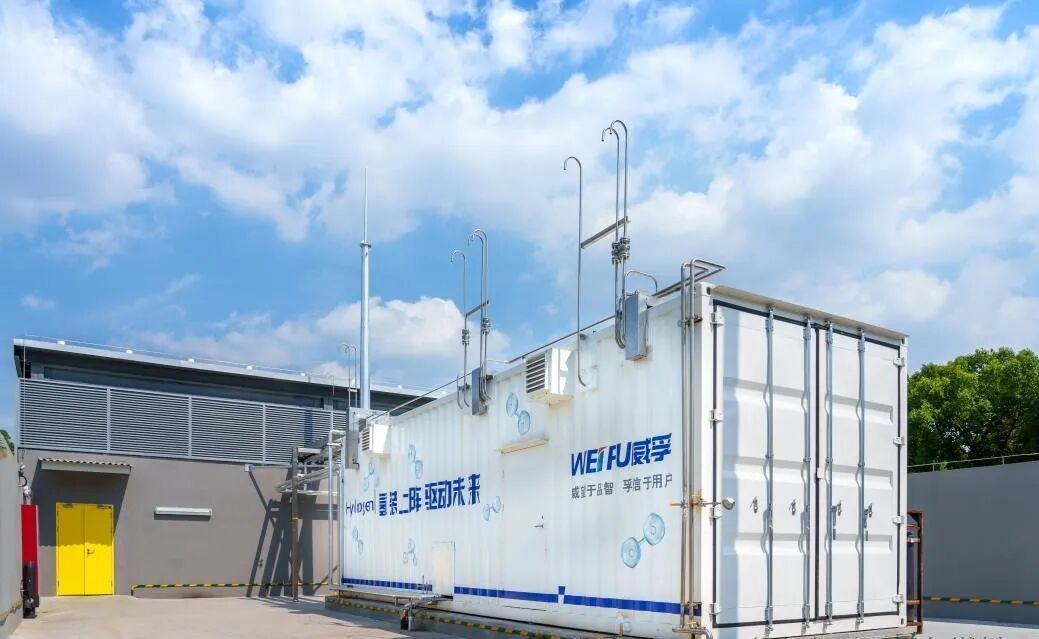
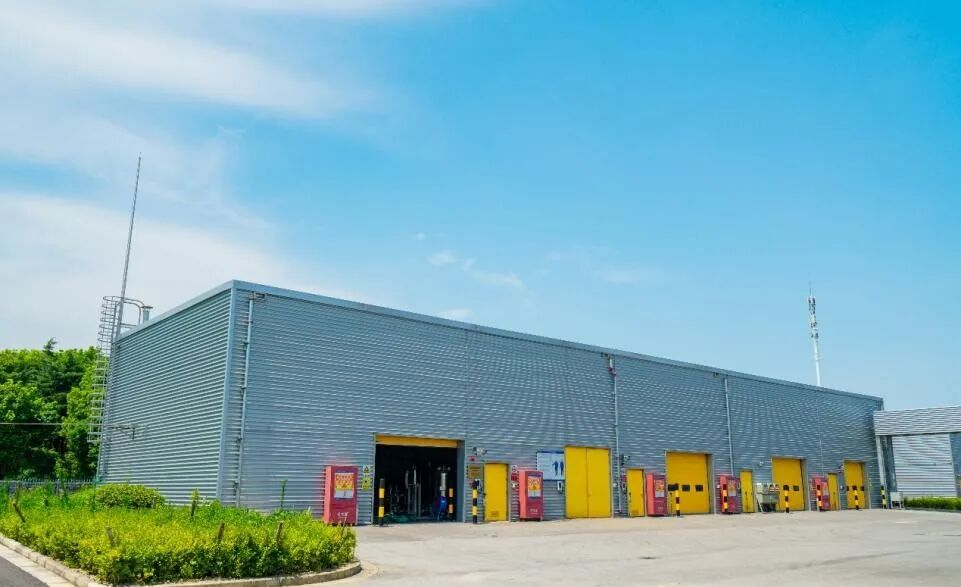
The project adopts the coupled technology of smart grid and PEM water electrolysis for hydrogen production. By optimizing the coupled control logic of hydrogen production processes with multiple technical routes, it achieves efficient conversion of renewable energy, focusing on serving the needs of in-depth carbon reduction and decarbonization in the manufacturing of core automotive components and industrial production fields.The hydrogen production station is equipped with a modular skid-mounted hydrogen production system independently developed by Weifu. It features a stable hydrogen production pressure of no less than 3.5MPa, can operate stably within a 10-110% power fluctuation range according to downstream demands with second-level load variation, and has a system energy consumption of ≤5kWh/Nm³-H₂, effectively ensuring the demand for high-quality hydrogen in downstream applications.
Yin Zhenyuan, Deputy Secretary of the Party Committee and President of Wuxi Industrial Group, and Secretary of the Party Committee and Chairman of Weifu Group, stated that the commissioning of this project is a crucial step for Weifu to transform from "traditional auto parts" to "zero-carbon equipment". Taking this commissioning as a new starting point, Weifu will actively promote the optimization and improvement of hydrogen energy industry policies in Wuxi and even Jiangsu Province, deeply promote the coordinated development of upstream and downstream industrial chains, strive to build a high-quality and efficient hydrogen energy industry ecosystem, and contribute Weifu's strength to the national energy transformation strategy!
Since 2018, Weifu Group has focused on the three business directions of "hydrogen utilization, hydrogen production, and hydrogen storage", and mapped out the development blueprint for the hydrogen energy industry chain. In terms of hydrogen production system development, it has followed the integrated product development model, built and put into operation its own large-scale indoor hydrogen production laboratory in Jiangsu Province, which has the capability to evaluate key materials and hydrogen production systems of 200kW and below. The production base is planned to have a 1GW equipment production capacity to meet the needs of water electrolysis hydrogen production equipment in multiple dimensions and scenarios, and initially has R&D, production and industrial chain service capabilities in multiple fields of the hydrogen energy industry.
PEM water electrolysis hydrogen production coupling technology refers to the integration of proton exchange membrane (PEM) water electrolysis hydrogen production technology with other energy systems or technologies to achieve a more efficient and flexible hydrogen production process.
Common Types of PEM Water Electrolysis Hydrogen Production Coupling Technologies
1.Coupling of offshore wind power and PEM water electrolysis hydrogen production: Offshore wind power has abundant resources and significant volatility. By coupling offshore wind power with PEM water electrolysis hydrogen production technology, the electrical energy generated by offshore wind power can be used for water electrolysis to produce hydrogen. For example, the PosHydon project in the Netherlands and the coupling of the Hornsea 2 offshore wind farm with the Gigastack project in the UK are typical applications of offshore wind power for hydrogen production.
2.Coupling of photovoltaic power and PEM water electrolysis hydrogen production: Photovoltaic power generation is intermittent and volatile. When coupled with PEM water electrolysis hydrogen production, the electrical energy generated by photovoltaic power can be used for water electrolysis to produce hydrogen, enabling efficient utilization and storage of clean energy. For instance, a simulation model of a wind-solar-storage and electrolytic hydrogen production system includes photovoltaic modules, energy storage modules, wind turbine modules, and electrolyzer hydrogen production modules. By integrating renewable energy, energy storage systems, and electrolytic hydrogen production technologies, the coordinated operation of the system is realized.
Advantages of PEM Water Electrolysis Hydrogen Production Coupling Technology
1.Efficient utilization of renewable energy: Renewable energy sources such as wind and solar energy are characterized by volatility and intermittency, making them difficult to be directly integrated into the power grid. By coupling with PEM water electrolysis for hydrogen production, these unstable energy sources can be converted into stable hydrogen energy, enabling efficient utilization and storage of energy.
2.Enhancing flexibility and stability of energy systems: PEM water electrolysis hydrogen production equipment boasts advantages such as rapid start-up and shutdown, and excellent dynamic response characteristics. It can quickly adjust hydrogen production power according to the output changes of renewable energy, thereby improving the flexibility and stability of energy systems.
3.Reducing carbon emissions: PEM water electrolysis hydrogen production technology itself is a clean hydrogen production method. When coupled with renewable energy, it can realize "green electricity" for "green hydrogen" production, generating almost no carbon emissions throughout the process, which is conducive to achieving carbon neutrality goals.
Article Source: Chemical Industry and Carbon Emission Reduction
Disclaimer: The information on this website is reproduced from cooperative media, institutions, or other websites. It is published solely for the purpose of disseminating more information and does not imply endorsement of the views expressed or verification of the content’s accuracy. All information on this website is for reference only and shall not serve as the basis for any transactions or services.If any content on this website involves infringement or other issues, please notify us promptly, and we will modify or delete it without delay. Anyone who accesses this website or uses its materials directly or indirectly in any manner shall be deemed to have voluntarily accepted the constraints of this disclaimer.