Analysis and Comparison of Multiple Wind Solar Coupled Electrolysis Water Hydrogen Production Solutions
Analysis and Comparison of Multiple Wind-Solar Coupled Water Electrolysis Hydrogen Production SchemesAs important utilization methods of renewable energy, wind power and photovoltaic (PV) power generation are effective solutions to the current energy dilemma. With strong support from relevant national policies, China's wind power and PV industries have developed rapidly. In 2021, the total newly installed capacity of wind power and PV power generation in China was approximately 101 million kW, including 47.57 million kW of newly installed wind power capacity and 52.97 million kW of newly installed PV capacity.However, both wind power and PV power generation have characteristics such as intermittency and uneven spatial-temporal distribution. If a single wind power or PV power source is used in the water electrolysis hydrogen production process, it may reduce the utilization hours of hydrogen production equipment and result in poor economic efficiency. Therefore, it is necessary to combine the complementary characteristics of wind and solar energy with the features of water electrolysis hydrogen production equipment to develop wind-solar coupled water electrolysis hydrogen production. This approach can reduce redundant project investment, fully and rationally utilize renewable energy for hydrogen production, and comprehensively improve the economic efficiency of water electrolysis hydrogen production.The following sections introduce multiple wind-solar coupled water electrolysis hydrogen production schemes, including: wind-solar coupled flexible water electrolysis hydrogen production; "wind-solar grid-connection + surplus power for hydrogen production"; "wind-solar complementary hydrogen production + surplus power grid-connection"; distributed on-site off-grid hydrogen production using wind and solar energy; AC/DC coupled off-grid high-voltage transmission for wind-solar hydrogen production; and "wind-solar grid-connection + surplus power for hydrogen production, storage, and power generation grid-connection".
1. Wind-Solar Coupled Flexible Water Electrolysis Hydrogen Production Scheme
The wind-solar coupled flexible water electrolysis hydrogen production technology consists of 6 core technologies and 3 core products. It realizes the flexible integration of the hydrogen production system with multiple energy forms (such as wind, solar, storage, and grid) and various application scenarios, constructing a flexible, efficient, and grid-friendly green power-to-hydrogen system.
The 6 core technologies are mainly as follows:
1. Flexible networking technology: Composed of steady/transient simulation analysis, medium-voltage cascading technology, large-capacity DC breaking technology, black start technology, and fault ride-through, this technology addresses the coupling and operation modes between the water electrolysis hydrogen production system and renewable energy systems. It can be adapted to local conditions to meet the needs of different application scenarios.
2. Power electronics technology: Consisting of topology technology, drive technology, pulse width modulation (PWM) control technology, and platform technology, this technology adopts PWM control algorithms to build an efficient and grid-friendly electricity-hydrogen coupling bridge.
3. Electrochemical and process control technologies: These two technologies feature advanced capabilities in structure, materials, electrolyzer cell body, and process control, enabling more efficient, safe, and flexible electricity-to-hydrogen conversion processes.
4. Energy management technology: This technology can resolve the coupling of multi-physical processes (electricity, heat, and mass) and build an integrated electricity-hydrogen (synergistic) management system. On the "source" side, it achieves smooth wind-solar output, tracking of planned output power, reactive power and voltage support, and grid dispatching response. On the "grid" side, it realizes system peak shaving and frequency modulation. On the "load" side, it fulfills functions such as stabilizing hydrogen production and tracking hydrogen production plans.
5. Cluster control technology: This technology can realize functions including cell voltage monitoring, fault analysis and diagnosis, electrolyzer energy efficiency analysis, and state of health (SOH) estimation. It can also perform hierarchical regulation control, dynamic switching control, intelligent power distribution operation, and hot standby operation control, making the flexible hydrogen production system operate more intelligently and efficiently.
The three core products mainly include flexible hydrogen production power supplies, flexible water electrolysis hydrogen production equipment (alkaline electrolyzers, proton exchange membrane (PEM) electrolyzers, gas-liquid separation and purification equipment), and intelligent hydrogen energy management systems.Flexible hydrogen production power supplies adopt insulated gate bipolar transistor (IGBT) fully controlled power devices and PWM control algorithms, featuring high conversion efficiency, fast response speed, high output precision, and excellent grid support capability.Flexible water electrolysis hydrogen production equipment has wide load regulation range to adapt to the fluctuation characteristics of renewable energy; it is equipped with advanced electricity-hydrogen collaborative control algorithms, enabling faster dynamic response speed.The intelligent hydrogen energy management system possesses core capabilities such as system integration, energy management, and cluster control.
2. "Wind-Solar Grid-Connection + Surplus Power for Hydrogen Production" Scheme
The "wind-solar grid-connection + surplus power for hydrogen production" system comprises wind turbine units, photovoltaic arrays, wind turbine converters, photovoltaic inverters, step-up transformers, step-down transformers, IGBT hydrogen production rectifier power supplies, hydrogen production devices, hydrogen storage devices, intelligent hydrogen energy management systems, and the power grid, with its structure illustrated in Figure 1.
This system is equipped with management functions for wind-solar power generation, grid-connected electricity quantity, and hydrogen production quantity. When the grid-connected electricity from wind and solar power generation meets the preset value, the surplus power from wind-solar complementation is used for hydrogen production. This not only improves the utilization rate of renewable energy but also enhances the utilization efficiency of equipment.
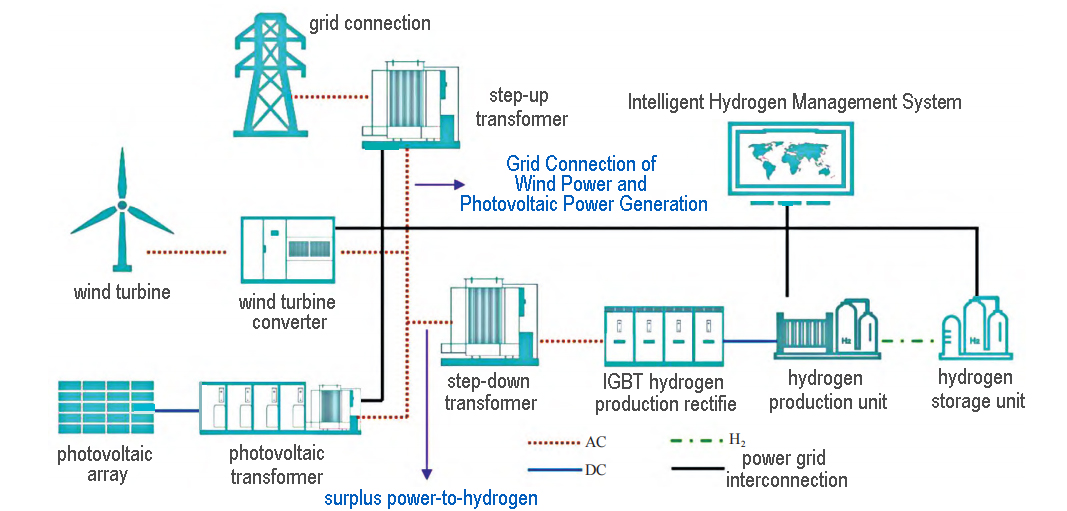
Figure 1 Schematic Diagram of the "Wind-Solar Grid-Connection + Surplus Power for Hydrogen Production" System
3. "Wind-Solar Complementary Hydrogen Production + Surplus Power Grid-Connection" Scheme
The "wind-solar complementary hydrogen production + surplus power surplus power grid-connection" system includes wind turbine units, photovoltaic arrays, wind turbine converters, photovoltaic inverters, step-up transformers, step-down transformers, IGBT hydrogen production rectifier power supplies, hydrogen production devices, hydrogen storage devices, intelligent hydrogen energy management systems, and the power grid, with its structure shown in Figure 2.
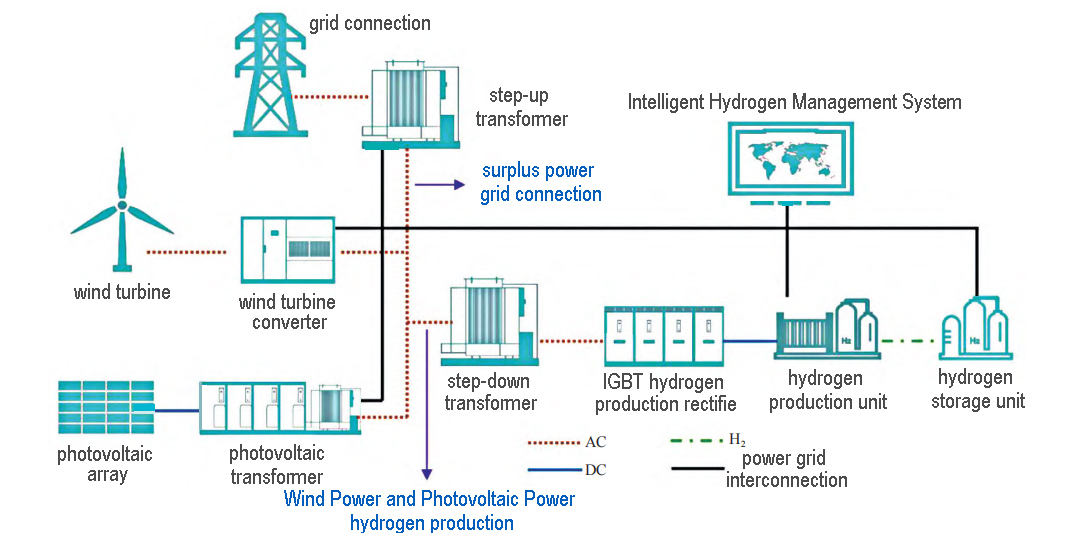
Figure 2 Schematic Diagram of the "Wind-Solar Complementary Hydrogen Production + Surplus Power Grid-Connection" System
This system is equipped with management functions for wind-solar power generation, grid-connectedelectricity fed into the grid, and hydrogen production volume. When the wind-solar power generation meets the electricity demand for hydrogen production, the surplus electricity is fed into the grid. This method makes use of renewable energy while improving the utilization rate of equipment.
4. Distributed Wind-Solar On-Site Off-Grid Hydrogen Production Scheme and AC/DC Coupled Off-Grid High-Voltage Transmission Wind-Solar Hydrogen Production Scheme
Most of China's photovoltaic power stations and wind farms are built in less developed areas with low land rents. The concentrated construction and grid-connection of a large number of photovoltaic power stations and wind farms have led to saturation of local grid capacity, prompting the grid to adopt power restriction measures. As a result, wind and solar curtailment becomes inevitable, leading to massive waste of energy resources.Photovoltaic power stations or wind farms with solar or wind curtailment often lack the conditions for building hydrogen production stations. Therefore, to better utilize renewable energy power and produce green hydrogen, either the distributed wind-solar on-site off-grid hydrogen production scheme or the AC/DC coupled off-grid high-voltage transmission wind-solar hydrogen production scheme can be adopted.
The distributed wind-solar on-site off-grid hydrogen production scheme enables DC-coupled hydrogen production, which is suitable for large-scale distributed wind-solar hydrogen production, especially for offshore hydrogen production from deep-sea offshore wind power.
The AC/DC coupled off-grid high-voltage transmission wind-solar hydrogen production scheme requires self-built power grids with no interaction with public grids. It usually needs to be equipped with an energy storage system to support water electrolysis hydrogen production equipment in following the output power characteristic curves of wind power and photovoltaic power generation.
The distributed wind-solar on-site off-grid hydrogen production system mainly includes wind turbine units, photovoltaic arrays, IGBT hydrogen production DC conversion power supplies, hydrogen production devices, hydrogen storage devices, and intelligent hydrogen energy management systems, with its structure shown in Figure 3.
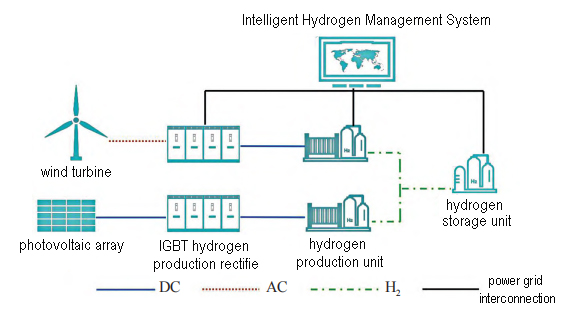
Figure 3 Schematic Diagram of the Distributed Wind-Solar On-Site Off-Grid Hydrogen Production System
The AC-coupled off-grid high-voltage transmission wind-solar hydrogen production system mainly includes wind turbine units, photovoltaic arrays, wind turbine converters, photovoltaic inverters, step-up transformers,high-voltage power grids, step-down transformers, IGBT hydrogen production rectifier power supplies, hydrogen production devices, hydrogen storage devices, intelligent hydrogen energy management systems, and energy storage battery systems, with its structure shown in Figure 4.
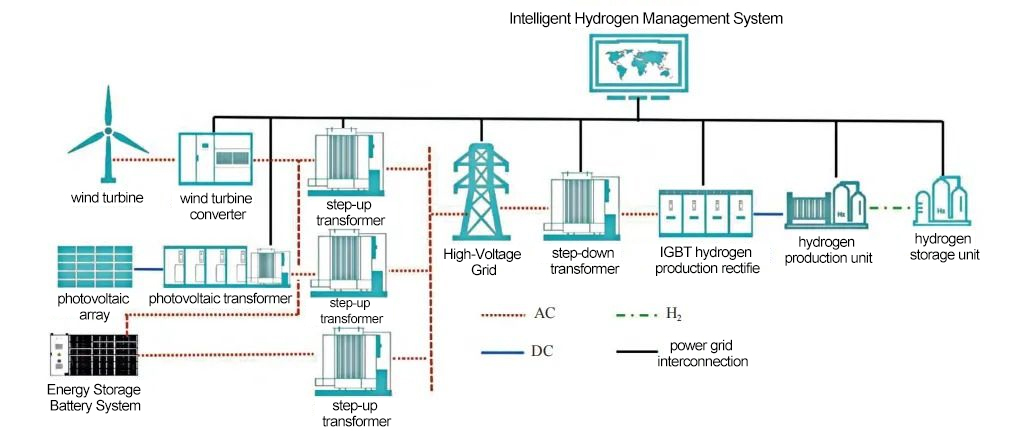
Figure 4 Schematic Diagram of the DC-Coupled Off-Grid High-Voltage Transmission Wind-Solar Hydrogen Production System
In general, DC power transmission technology has been widely applied in power systems and can effectively address the issue of inductive loss in transmission lines.
This technology holds distinct advantages in scenarios such as long-distance and large-capacity power transmission, power system interconnection, long-distance submarine cables, power supply via underground cables in large cities, and flexible DC transmission in distribution networks.
In future transmission systems, DC power transmission and AC power transmission will complement each other, forming a more diverse, efficient, and safe new type of power transmission system.
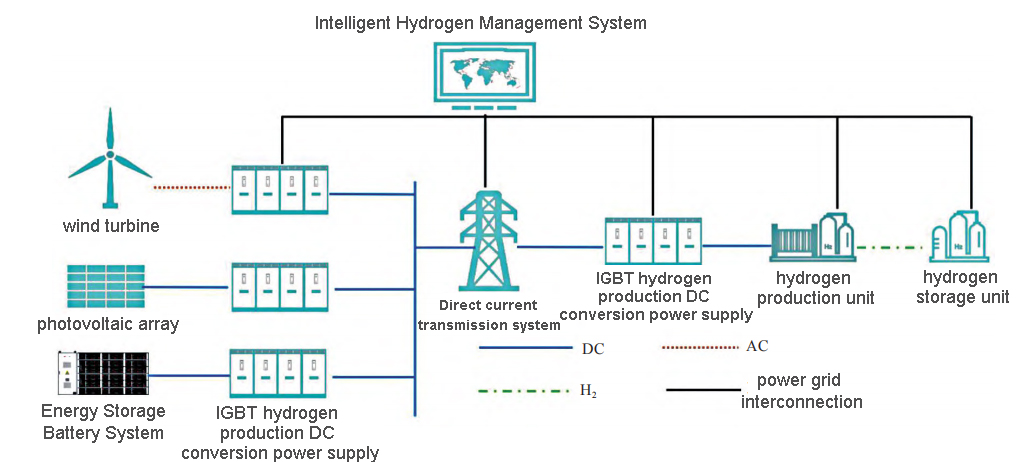
Figure 5 Schematic Diagram of the DC-Coupled Off-Grid High-Voltage Transmission Wind-Solar Hydrogen Production System
In general, DC power transmission technology has been widely applied in power systems and can effectively address the issue of inductive loss in transmission lines.
This technology holds distinct advantages in scenarios such as long-distance and large-capacity power transmission, power system interconnection, long-distance submarine cables, power supply via underground cables in large cities, and flexible DC transmission in distribution networks.
In future transmission systems, DC power transmission and AC power transmission will complement each other, forming a more diverse, efficient, and safe new type of power transmission system.
5 "Wind-Solar Grid-Connection + Surplus Power for Hydrogen Production, Storage, and Power Generation Grid-Connection" Scheme
The "wind-solar grid-connection + surplus power for hydrogen production, storage, and power generation grid-connection" system includes wind turbine units, photovoltaic arrays, hydrogen consumption ends, wind turbine converters, photovoltaic inverters, hydrogen storage devices, hydrogen fuel cells, step-up transformers, hydrogen production devices, IGBT hydrogen production rectifier power supplies, step-down transformers, high-voltage power grids, and intelligent hydrogen energy management systems, with its structure shown in Figure 6.
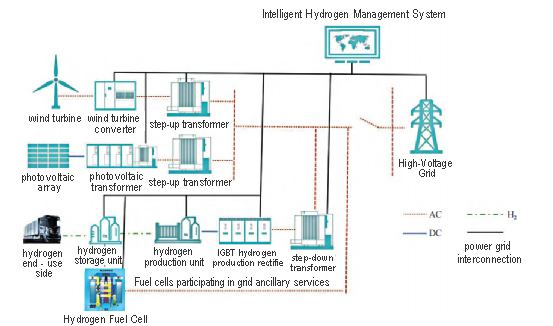
Figure 6 Schematic Diagram of the "Wind-Solar Grid-Connection + Surplus Power for Hydrogen Production, Storage, and Power Generation Grid-Connection" System
The system mainly connects photovoltaic power and wind power to the grid first. When there is surplus electricity, part of the surplus can be absorbed through water electrolysis for hydrogen production, and the produced hydrogen is stored in hydrogen storage devices. When the surplus electricity from photovoltaic and wind power cannot meet the power demand, hydrogen fuel cells are used to consume hydrogen for power generation.
In addition, when wind and photovoltaic power generation are insufficient but a large amount of hydrogen is urgently needed, grid electricity can also be supplemented for water electrolysis hydrogen production. Hydrogen fuel cells realize electricity storage through the "electricity-hydrogen-electricity" cycle, thereby achieving peak shaving and valley filling for the power grid.
The green hydrogen produced from wind and solar surplus electricity, after storage, can not only serve as a fuel source for hydrogen energy vehicles to replace oil and gas resources but also be used in chemical and metallurgical industries to reduce carbon emissions in the industrial sector.
6. Comparison of Main Water Electrolysis Hydrogen Production Technology Applications
Among the water electrolysis hydrogen production technologies in various wind-solar coupled schemes, there are currently three main technical routes: alkaline water electrolysis hydrogen production, PEM water electrolysis hydrogen production, and solid oxide water electrolysis hydrogen production.Among them, the two technologies that have been practically applied are mainly alkaline water electrolysis hydrogen production and PEM water electrolysis hydrogen production.
Solid oxide water electrolysis hydrogen production is a high-temperature water electrolysis technology, with a temperature typically ranging from 700 to 1000 ℃. Currently, this technology features high cost and great difficulty, and is in the development and verification stage, without practical application in the market.
Alkaline water electrolysis hydrogen production is a hydrogen generation technology that uses potassium hydroxide solution as the electrolyte and a porous membrane as the diaphragm. Being quite mature, it stands as the mainstream and large - scale applied water electrolysis hydrogen production technology currently. At present, China's water electrolysis hydrogen production systems are mainly pressure - based systems. Years of construction and operational practice have proven that an alkaline water electrolysis hydrogen production system composed of electrolyzers and their auxiliary equipment, pure water preparation devices, alkaline solution preparation devices, hydrogen purification devices, hydrogen compressors, hydrogen storage tanks, DC power supplies, and automatic control devices is more reasonable. Although the alkaline water electrolysis hydrogen production system has drawbacks such as large equipment size, high maintenance costs, small operating current, and poor adaptability to the input of volatile power sources like wind and solar power generation, it remains the mainstream water electrolysis hydrogen production technology in recent years due to its mature technology and relatively low cost.
Compared with alkaline water electrolysis hydrogen production technology, PEM water electrolysis hydrogen production technology replaces the diaphragm and electrolyte in the alkaline type with a proton exchange membrane. It boasts advantages including low electrical resistance, high hydrogen production efficiency, large current, and a small equipment footprint. Moreover, systems adopting this technology can achieve rapid start - up and shutdown, wide - range power regulation, and exhibit strong adaptability to the input of volatile power sources such as wind and solar power. Consequently, it is highly suitable for wind - solar coupled water electrolysis hydrogen production schemes. Currently, the main reasons preventing its large - scale application lie in the need for further optimization and breakthroughs, as well as its higher cost compared to alkaline water electrolysis hydrogen production technology. Nevertheless, with continuous technological improvements and cost reductions, this technology holds enormous advantages and broad prospects for application in renewable energy - coupled water electrolysis hydrogen production featuring high volatility.
Article Source: Dinghai—plan
Disclaimer:The information published on this website is reproduced from cooperative media, institutions, or other websites. It is intended solely for the purpose of disseminating more information and does not imply endorsement of the views expressed or verification of the accuracy of the content. All information on this website is for reference only and shall not serve as the basis for transactions or services.If any content on this website infringes upon intellectual property rights or contains other issues, please notify us promptly, and we will modify or delete it without delay. Anyone who accesses this website or uses its materials directly or indirectly in any manner shall be deemed to have voluntarily accepted the constraints of this disclaimer.